The charm of a warm, sunny Mediterranean getaway is undeniable. It’s no wonder Mediterranean style is a favorite in home decor. This style brings the calm of Southern Europe’s coasts into our homes.
The timeless elegance of this style is irresistible. It offers warmth, relaxation, and a connection to nature. Let’s dive into what makes greek mediterranean interior design special. We’ll learn how to bring this beauty into our homes, creating a peaceful and stylish space.
Key Takeaways
- Understanding the essence of Mediterranean style
- Key elements that define Greek Mediterranean Interior Design
- Tips for incorporating this style into your home decor
- The benefits of embracing a nature-inspired aesthetic
- Creating a serene and sophisticated living space
Introduction to Greek Mediterranean Design
Exploring Greek Mediterranean Design, we find a blend of elegance and warmth. This style is deeply connected to the Mediterranean region, with a special focus on Greece.
The design uses bright and earthy colors, inspired by the Mediterranean’s landscapes and culture. It’s not just about looks; it’s about making homes feel warm and welcoming.
What is Greek Mediterranean Design?
Greek Mediterranean Design takes inspiration from the Mediterranean Sea’s countries. It captures the region’s spirit with natural materials, earthy colors, and classic designs.
This style is known for its warm and inviting feel. It’s ideal for homes that mix tradition with modern flair.
Key Characteristics of the Style
Greek Mediterranean Design stands out with its vibrant and earthy colors. It also features natural materials like stone and wood, along with classic architectural touches.
- Earthy tones and natural materials
- Classic architectural elements
- Vibrant yet soothing color palette
These elements combine to create a style that’s both elegant and cozy. It’s perfect for making a home feel welcoming.
Historical Overview of Greek Mediterranean Design
Greek Mediterranean design combines ancient traditions with modern touches. It has evolved over time, influenced by many cultures. This blend creates a style that is both timeless and elegant.
Influences from Ancient Greece
Ancient Greek homes have shaped Greek Mediterranean design. They emphasized harmony and proportion. This is still seen in today’s interiors, with columns, arches, and domes adding elegance.
These homes were built to fit perfectly into their surroundings. This idea is still used today. Natural materials like stone and wood add warmth and connect indoors to outdoors.
Evolution Through the Ages
Over time, Greek Mediterranean design has changed. The Mediterranean Revival architecture style, from the early 20th century, made Mediterranean elements more popular in homes.
It has also been influenced by Spanish Villas and Moroccan riads. This mix of cultures has enriched the Greek Mediterranean style, making it diverse and rich.
| Historical Influence | Design Elements |
|---|---|
| Ancient Greece | Columns, arches, domes, emphasis on harmony and proportion |
| Spanish Villas | Rustic charm, use of terracotta and wood |
| Moroccan Riads | Ornate details, use of tiles and intricate patterns |
Understanding the history of Greek Mediterranean design helps us see its beauty. It’s a mix of old and new, creating a welcoming space in any home.
Color Palette and Textures
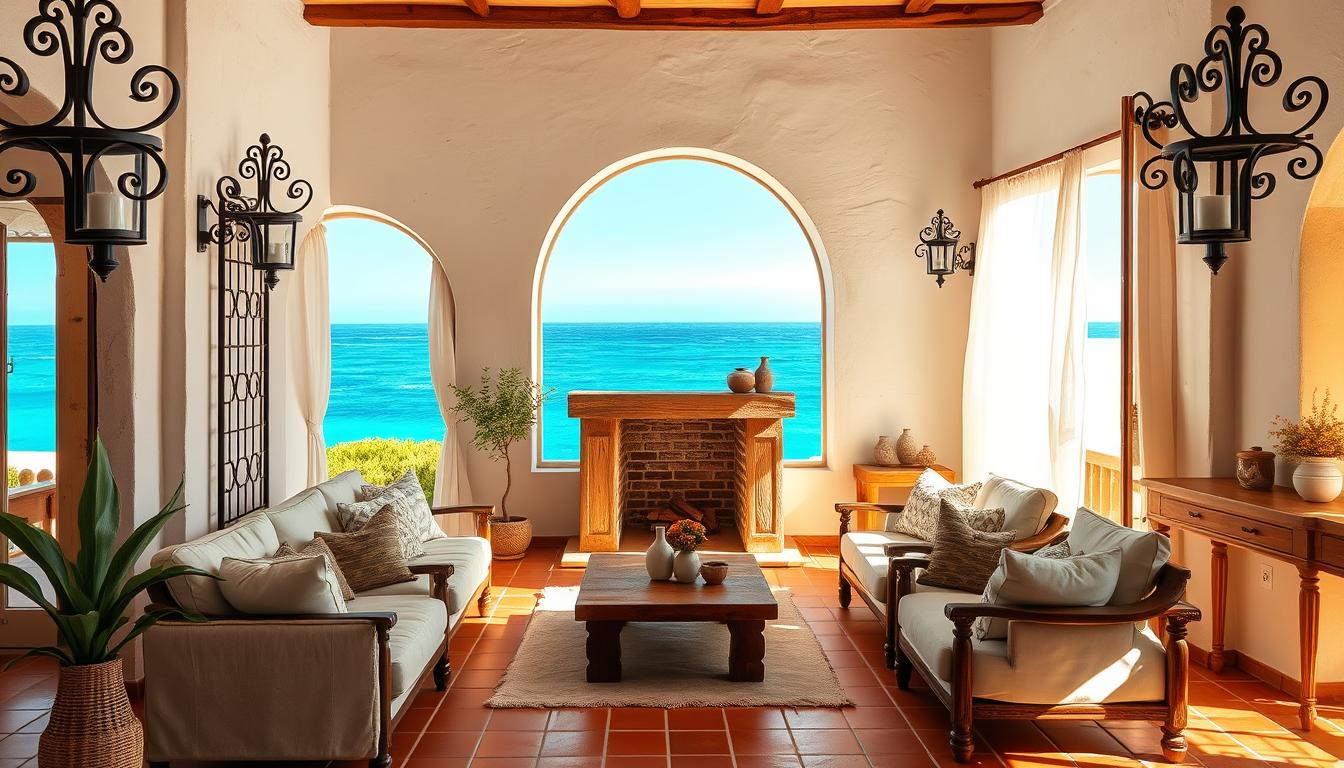
Greek Mediterranean design is known for its rich color palette and textures. These elements bring the beauty of the Mediterranean to your home. The style is inspired by the region’s sun-kissed landscapes, turquoise seas, and rustic buildings.
Natural Colors Inspired by the Landscape
The colors in Greek Mediterranean interiors are warm and inviting. You’ll find terracotta, ochre, and olive green alongside cool turquoise, cobalt blue, and crisp white. These hues reflect the natural beauty around us and make spaces feel cozy.
Some standout colors in Mediterranean design are:
- Earth tones like terracotta and sienna
- Cool blues that remind us of the sea
- Soft greens that mirror the region’s plants
- Crisp whites that bring elegance
Texture Choices: Stone, Wood, and Fabrics
Mediterranean interiors are rich in natural materials. Stone, wood, and ceramic are common, adding a rustic charm. These textures enhance the space’s depth and interest.
Popular textures include:
- Stone for floors and walls
- Wood for beams and furniture
- Fabrics like linen and cotton for comfort
Interior design experts say, “Achieving a Mediterranean look is about balancing colors and textures.” This blend of natural hues and textures makes Greek Mediterranean design both unique and captivating.
Furniture and Decor Elements
Greek Mediterranean design is all about blending function with timeless beauty. It shows off the region’s rich culture and makes spaces feel warm and welcoming.
The furniture in Greek Mediterranean homes is sturdy yet elegant. It’s often made from wood and may have detailed carvings. The upholstery uses natural fabrics like linen and cotton, adding to the organic feel.
Signature Furniture Styles
Traditional styles are at the heart of Greek Mediterranean furniture. Pieces are crafted from solid wood, like olive or walnut, and may have ornate details. The goal is to create furniture that’s both beautiful and practical.
Some key features of this style include:
- Use of natural materials
- Intricate carvings and craftsmanship
- Simple, elegant lines
- Comfortable and functional design
Importance of Handcrafted Items
Handcrafted items are vital in Greek Mediterranean decor. They add a personal touch and a sense of history. Whether it’s carved wood, handmade pottery, or woven textiles, they make the space unique.
Interior design experts say handcrafted items are more than just decor. They tell stories of heritage and the artisans who made them. This blend of old and new is key in modern Greek design.
“The art of traditional Greek craftsmanship is evident in the intricate details and the love that goes into creating each piece, making every item a work of art.”
To show the differences between traditional and modern Greek Mediterranean furniture, let’s look at a table:
| Characteristics | Traditional | Modern |
|---|---|---|
| Materials | Solid wood, natural fabrics | Reclaimed wood, sustainable materials |
| Craftsmanship | Intricate carvings, handmade | Simplified carvings, mix of handmade and machine-made |
| Design Focus | Ornate details, traditional patterns | Clean lines, minimalist patterns |
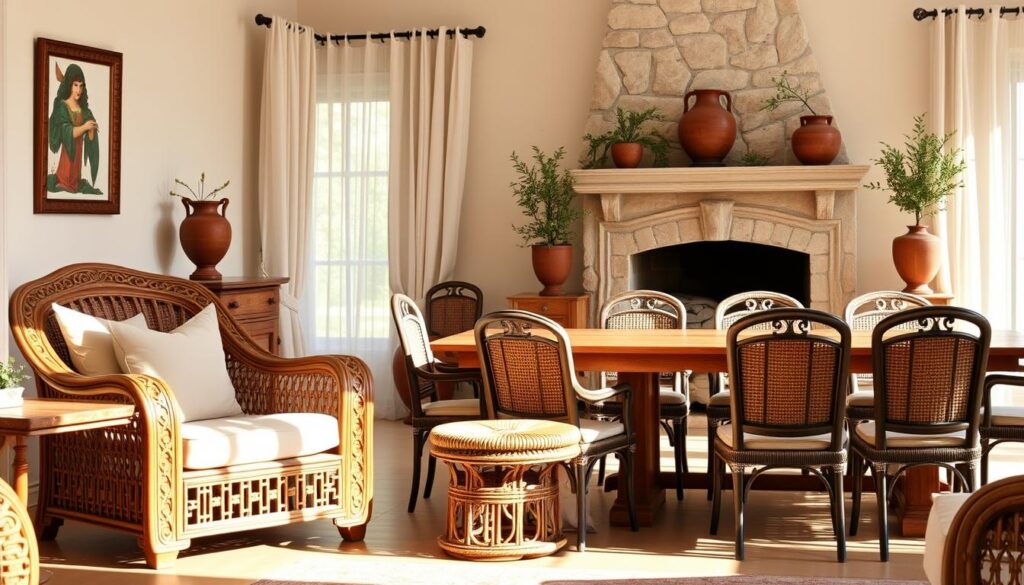
In conclusion, furniture and decor in Greek Mediterranean design are essential. They create a space that’s both elegant and inviting. By using traditional styles and handcrafted items, homeowners can achieve a beautiful and culturally rich look.
Lighting Solutions in Greek Mediterranean Design
The Greek Mediterranean style loves light, both from the sun and man-made sources. It makes spaces feel big and connected to the outdoors. This design makes spaces warm, inviting, and beautiful.
Natural Light: Harnessing Beautiful Views
One key feature of Greek Mediterranean design is using natural light. Big windows, sliding glass doors, and skylights let sunlight in. This cuts down on the need for artificial light during the day.
Maximizing natural light is more than just big windows. It’s about knowing how the sun moves and how it affects the inside of a building. Architects plan buildings to capitalize on natural illumination. This makes the inside feel bigger and more connected to nature.
Types of Lighting Fixtures
Artificial light is also key in Greek Mediterranean design, for when the sun goes down. The right lighting can change a room’s feel, from traditional to modern.
| Lighting Fixture | Description | Style |
|---|---|---|
| Lanterns | Often used outdoors, these fixtures add a touch of traditional Greek flair. | Classic |
| Pendant Lights | Used to create a focal point in a room, pendant lights can be simple or ornate. | Modern/Classic |
| Sconces | Wall-mounted sconces provide ambient lighting and can be decorative. | Traditional/Modern |
By mixing natural light with the right artificial lighting, Greek Mediterranean design creates a special balance. This balance makes the inside spaces even more beautiful.
The Role of Outdoor Spaces
Greek Mediterranean design is special because it blends indoor and outdoor spaces. This approach makes living areas feel more connected. Outdoor spaces are seen as an extension of the home.
Outdoor areas in Greek Mediterranean homes are welcoming and cozy. They often have patios and balconies with beautiful views. These spots are set up with comfy seating, greenery, and decorative touches like fountains and mosaics.
Patios and Balconies: Blending Indoor and Outdoor
Patios and balconies are key in Greek Mediterranean design. They act as bridges between inside and outside. These areas are decorated with handcrafted furniture and tiles, making them look great. They also use natural materials like stone and wood, mirroring the beauty of nature.
To learn more about Greek Mediterranean interior design, check out Coohom’s article. It offers a detailed look at the design principles and elements.
Mediterranean Gardens: Creating Serenity
Mediterranean gardens are a big part of outdoor spaces in Greek Mediterranean homes. These gardens aim to bring peace and calm. They use native plants, olive trees, and herbs, and add natural stone and gravel for a rustic feel.
By designing outdoor spaces well, Greek Mediterranean homes find a balance between nature and architecture. Whether it’s a cozy patio or a lush garden, these areas add to the timeless beauty of Greek Mediterranean design.
Incorporating Art and Culture
Greek Mediterranean design is rich in culture and art. It’s not just about looks; it’s about adding Greek culture to your home.
Traditional Greek art is a key way to add culture to your home. Look for handcrafted ceramics, intricate mosaics, and traditional textiles.
Greek Art Influence in Design
Greek art has a long history. Its beauty and craftsmanship can be seen in Mediterranean design. From ancient pottery to Byzantine mosaics, Greek art tells stories.
Key Elements of Greek Art:
- Intricate patterns and designs
- Use of vibrant colors
- Storytelling through imagery
- Handcrafted quality
To add Greek art to your design, use decorative items like vases and wall hangings. Choose pieces with traditional Greek motifs.
Cultural Symbols and Their Significance
Cultural symbols add depth and meaning to Greek Mediterranean design. Symbols like the Greek key pattern and images of olive branches and laurel wreaths are common.
| Cultural Symbol | Significance |
|---|---|
| Greek Key Pattern | Represents eternity and unity |
| Olive Branch | Symbolizes peace and prosperity |
| Laurel Wreath | Signifies honor and achievement |
Using these symbols in your design makes your space beautiful and meaningful. It tells a story.
In conclusion, adding art and culture is key to a true Greek Mediterranean interior. By using traditional Greek art and symbols, you can make your home feel like Greece.
Fabrics and Patterns in Greek Mediterranean Design
Fabrics and patterns are key in Greek Mediterranean design. They mix comfort with elegance. Choosing the right textiles is essential for a true Greek Mediterranean look. These elements add beauty and warmth to the space.
Choosing the Right Fabrics
In Greek Mediterranean design, fabric choice is crucial. Natural fabrics like linen and cotton are best. They are breathable, comfortable, and durable.
These materials keep the space relaxed and casual. This is typical of Mediterranean style.
Upholstery often uses linen and cotton. Patterns range from simple stripes to detailed floral designs. These add comfort and make the space inviting.
Popular Patterns and Their Uses
The patterns in Greek Mediterranean design are varied and rich. Common ones include:
- Geometric patterns that show the region’s cultural heritage.
- Floral motifs that highlight Mediterranean flora’s beauty.
- Stripes for simplicity and elegance.
| Pattern Type | Common Use | Design Impact |
|---|---|---|
| Geometric | Upholstery, Rugs | Adds cultural depth |
| Floral | Draperies, Bedding | Brings natural beauty indoors |
| Stripes | Upholstery, Throw Pillows | Creates a sense of simplicity and elegance |
To enhance the Greek Mediterranean look, use textiles with these patterns. For example, a linen sofa with geometric patterns can be a focal point in a living room.
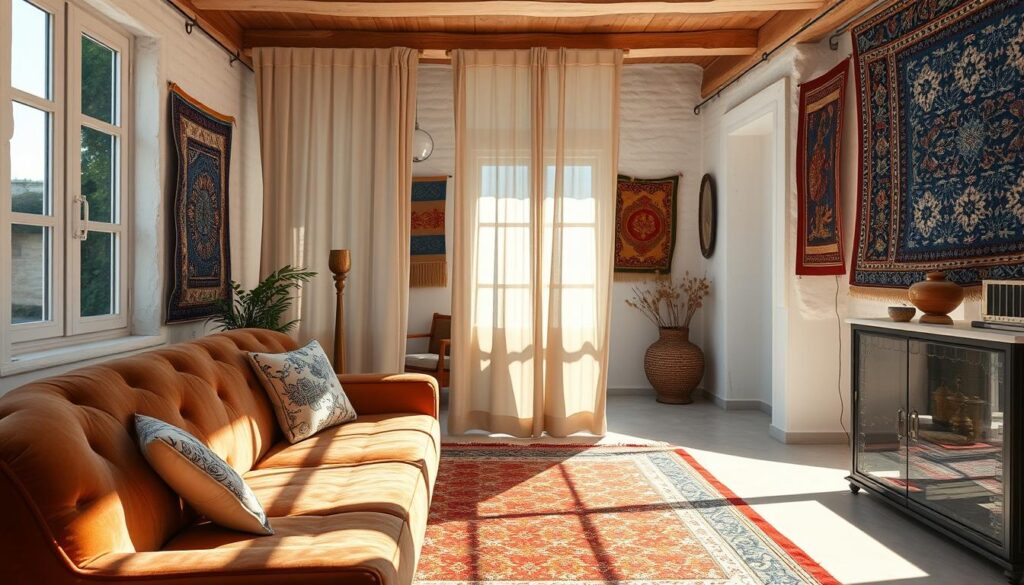
By picking the right fabrics and patterns, you can make a Greek Mediterranean interior that’s both stunning and welcoming. The goal is to blend comfort with elegance. This way, your space will feel both inviting and sophisticated.
Sustainability in Greek Mediterranean Interiors
Sustainability is more than a trend; it’s a key part of Greek Mediterranean interiors. It shows our deep bond with the earth and sea. This approach encourages eco-friendly living by using natural materials, cutting down waste, and focusing on lasting designs.
Eco-friendly Materials and Practices
Choosing eco-friendly materials is at the heart of sustainable Greek Mediterranean design. Natural stone, reclaimed wood, and local materials are top choices. They have a low environmental impact and fit well with the landscape.
These materials help lower a building’s carbon footprint. They also make the interior spaces feel warm and welcoming.
Practices like energy-efficient lighting and heating systems also play a big role. They help these homes use less non-renewable energy. This is done by using more natural light and thermal mass to control temperatures.
Designing for Longevity
Creating spaces that last is another key part of sustainable Greek Mediterranean design. This way, we don’t need to renovate or repair them often. It saves resources and keeps the cultural and historical value of traditional Greek Mediterranean architecture alive.
Timeless design elements, like classic furniture and traditional craftsmanship, help make these interiors last. Also, focusing on quality means each piece has a purpose and can stand the test of time.
In summary, sustainability in Greek Mediterranean interiors comes from using eco-friendly materials, sustainable practices, and timeless design. By following these principles, we can make spaces that are not only beautiful but also good for the environment.
Tips for Achieving Greek Mediterranean Style at Home
To turn your home into a Greek Mediterranean oasis, you need a careful design plan. This style is known for its warm feel and the way it blends indoor and outdoor areas. We’ll look at the main elements to focus on and common mistakes to steer clear of.
Key Elements to Focus On
To bring Greek Mediterranean style into your home, pay attention to these key elements:
- Color Palette: Choose natural colors like blues, whites, and earth tones inspired by Greece.
- Natural Materials: Use stone, wood, and clay to add warmth and texture.
Begin by picking a color scheme that captures the Mediterranean’s natural beauty. Blues and whites remind us of the sea and sky. Earth tones, like terracotta and sienna, bring warmth and depth.
Adding natural materials makes your design more authentic. Stone and wood are key in Greek Mediterranean architecture.
Common Mistakes to Avoid
When going for Greek Mediterranean style, it’s easy to make mistakes that can ruin the look. Here are a few to watch out for:
- Over-accessorizing: Don’t overdo it with too many decorative items.
- Ignoring Natural Light: Keep windows clear to let in plenty of sunlight.
One big mistake is over-accessorizing. Greek Mediterranean design is about simplicity, not clutter.
Another important thing is using natural light well. Greek Mediterranean homes often have big windows and open layouts to let in lots of sunlight.
Conclusion: Embracing Timeless Elegance
Greek Mediterranean Interior Design celebrates natural beauty and cultural richness. It brings timeless elegance to your home. This style makes your home warm and inviting, capturing the serene and vibrant spirit of the Mediterranean.
The Allure of Greek Mediterranean Style
Greek decor and Mediterranean style have won hearts for centuries. They mix traditional and modern elements beautifully. Modern Greek design combines classic charm with modern touches, creating a sophisticated and welcoming atmosphere.
Final Thoughts
Our journey through Greek Mediterranean Interior Design shows its timeless elegance. By using key elements of Mediterranean style, you can make your home beautiful and inviting. It reflects your personal taste and style perfectly.